
📋 Table of Contents
- My 4-Year Journey with the Sony A7 III
- Why I'm Tempted by the A7 IV
- Key Differences: A7 IV vs A7 III Specs
- 33MP vs 24MP: Does It Actually Matter?
- Autofocus Improvements: Is It That Much Better?
- Features I Honestly Don't Care About
- Remember: The Lens Matters More Than the Body
- Plot Twist: The A7 V Is Coming Soon
- Final Verdict: Should You Upgrade?
- FAQ
Here's my honest confession: I've been shooting professionally with the Sony A7 III for 4 years, and it's been absolutely fantastic. Both my wife Zori and I use A7 IIIs for La Estrella Photography, and they've never let us down. But lately, I've been eyeing the Sony A7 IV with its shiny 33-megapixel sensor and improved autofocus.
The question keeping me up at night: Is it worth spending $2,000 on a new camera when my current one works perfectly?
Let me walk you through my thought process, the real-world differences, and why I might just wait for the A7 V instead. 😄
My 4-Year Journey with the Sony A7 III
Let me start by saying this: the Sony A7 III is an incredible camera. Since 2021, it's been my workhorse for:
- Family portrait sessions
- Events photography
- Professional headshots
- Our specialty: iris photography (extreme close-ups of the eye)
- Travel and personal projects
The 24-megapixel sensor delivers beautiful files, the autofocus is reliable (especially with the latest firmware updates), and the battery life is legendary. After four years of heavy use, both cameras are still going strong.
"If it ain't broke, don't fix it" — my wallet, every time I look at camera gear websites
Why I'm Tempted by the A7 IV
So why am I even considering an upgrade? Here are the features that have me scrolling through camera review videos at midnight:
1. The 33-Megapixel Sensor
This is the big one for me. That extra resolution (33MP vs 24MP) would be incredibly useful for our iris photography work. When you're capturing extreme close-ups of someone's eye, having more pixels means:
- Better cropping flexibility — we can zoom in tighter without losing quality
- More detail in the iris patterns — those intricate structures are what make each eye unique
- Larger print sizes — clients love having their iris portraits printed big
- More room for composition adjustments in post-processing
📸 Quick Math: Resolution Difference
A7 III: 6000 x 4000 pixels (24MP)
A7 IV: 7008 x 4672 pixels (33MP)
Difference: 37.5% more pixels = significantly more detail for cropping
2. Improved Autofocus
The A7 IV has Sony's latest autofocus system with:
- 759 phase-detection AF points (vs 693 on A7 III)
- Better eye-AF for humans and animals
- Real-time tracking that's noticeably stickier
- Bird eye-AF (not relevant for our work, but cool!)
For family photography, especially with kids running around, that improved tracking could be a game-changer. But here's the thing: the A7 III's autofocus is already really good. Is "better" worth $2,000? That's the question.
Key Differences: A7 IV vs A7 III Specs Breakdown
Let's look at the side-by-side comparison to see what you're actually paying for:
| Feature | Sony A7 III | Sony A7 IV |
|---|---|---|
| Sensor Resolution | 24.2 MP | 33 MP |
| Autofocus Points | 693 | 759 |
| ISO Range | 100-51200 | 100-51200 |
| Burst Speed | 10 fps | 10 fps |
| Video (Internal) | 4K 30p (8-bit) | 4K 60p (10-bit) |
| LCD Screen | Tilting | Fully Articulating |
| Menu System | Old Sony Menu | New Touch Menu |
| Card Slots | 2x SD UHS-II | CFexpress Type A + SD |
| Battery Life (CIPA) | 710 shots | 580 shots |
| Weight | 650g | 658g |
| Price (2025) | $1,250 used / $1,500 new | $1,800 used / $2,000 new |
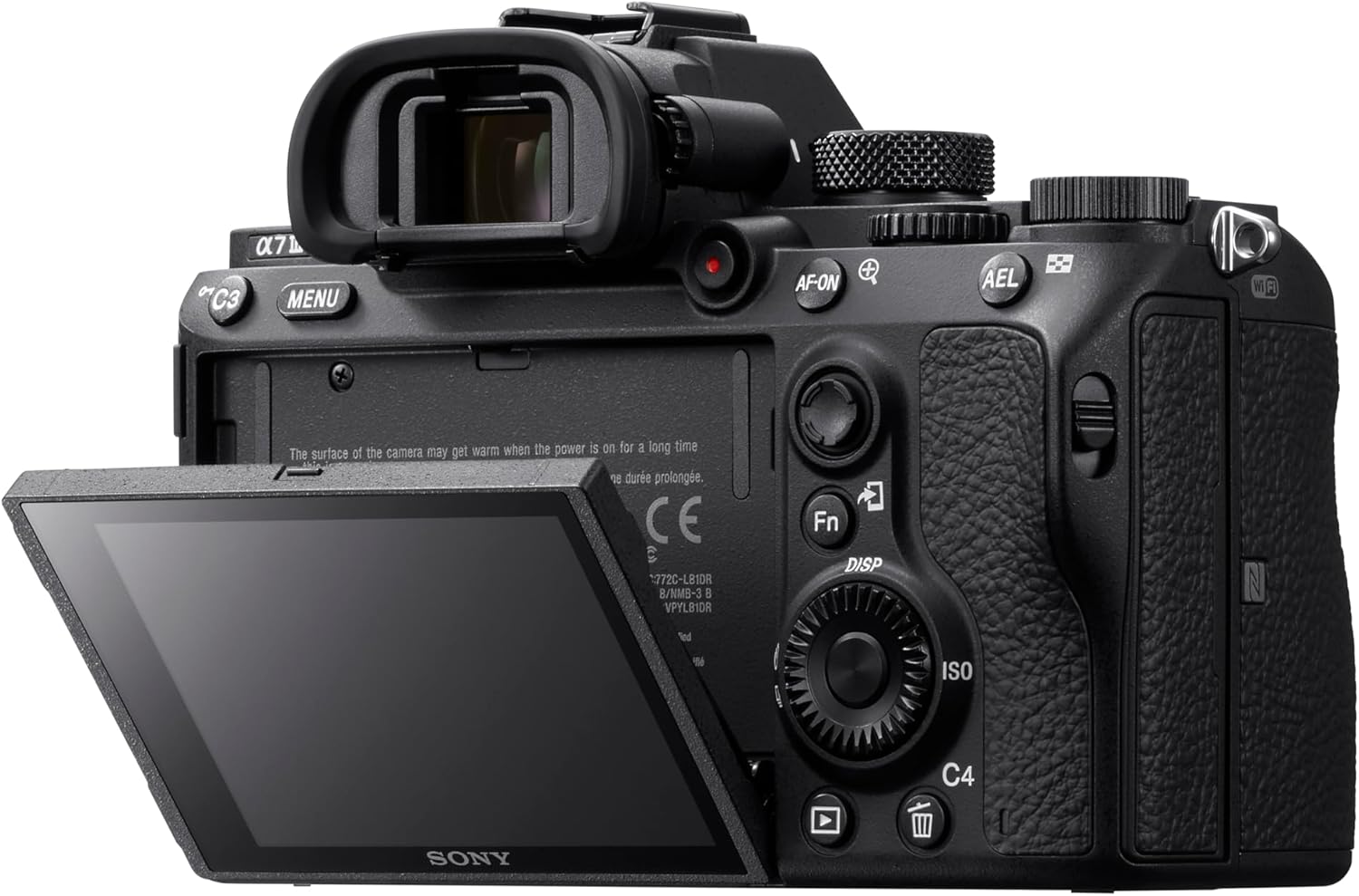
Sony Alpha A7 III
The workhorse full-frame camera. 24MP, 693 AF points, 10fps burst, legendary battery life. Still an excellent choice in 2025 with incredible value.
Check Price on Amazon →
Sony Alpha A7 IV
The latest generation. 33MP sensor, 759 AF points, 10-bit 4K 60p video, fully articulating screen. Best for videographers and high-resolution needs.
Check Price on Amazon →33MP vs 24MP: Does It Actually Matter?
Here's where things get interesting. For most photography, the difference between 24MP and 33MP is... honestly pretty minimal. Both resolutions are more than enough for:
- Social media posting
- Client galleries
- Prints up to 20x30 inches
- Professional portrait work
BUT (and this is a big but), the extra megapixels shine in specific scenarios:
When Higher Resolution Actually Helps:
✅ You'll benefit from 33MP if you:
- Crop heavily in post-production (like our iris photography)
- Print very large (30x40 inches or bigger)
- Do commercial work where clients need maximum flexibility
- Shoot landscapes and want every detail captured
- Create panoramas or multi-image compositions
❌ You WON'T notice much difference if you:
- Primarily share photos online (Instagram, Facebook)
- Shoot events where speed matters more than resolution
- Print standard sizes (8x10, 11x14)
- Already have great technique and composition
For us at La Estrella Photography, the higher resolution is genuinely useful for iris photography. But for our family portraits and event work? The A7 III's 24MP is more than enough.
Autofocus Improvements: Is It That Much Better?
Sony's marketing will tell you the A7 IV has "revolutionary" autofocus. After using both cameras, here's my honest take:
Yes, the A7 IV's autofocus is better. The eye-tracking is stickier, it finds faces faster, and the real-time tracking is more reliable. But—and this is important—the A7 III's autofocus is already excellent.
Real-World Scenarios:
- Family portraits in good light: Both cameras nail focus 99% of the time
- Kids running around: A7 IV has a slight edge, but A7 III still performs well
- Low-light situations: Both struggle similarly (it's physics, not magic)
- Eye-AF for portraits: Both are fantastic
The truth: If you're missing shots with the A7 III, better autofocus won't fix it. You probably need to work on your technique, anticipation, or shooting settings.
Features I Honestly Don't Care About
Let me be brutally honest about the A7 IV features that Sony loves to promote but I couldn't care less about:
1. 10-Bit 4:2:2 Video
I'm a photographer, not a videographer. While I occasionally shoot video for clients, the A7 III's 4K capabilities are more than enough. Do I need 10-bit color depth and 4:2:2 sampling? Absolutely not.
If you're primarily a photographer, this is a non-feature. If you're a serious video creator, this is huge. Know which category you fall into.
2. CFexpress Type A Cards
The A7 IV supports CFexpress Type A cards in addition to SD cards. Cool, right? Except:
- CFexpress cards cost $150-200 for 80GB
- SD cards cost $30-50 for 128GB
- I've never had an SD card fail on me in 4 years
- The speed difference doesn't matter for photography (only for high-bitrate video)
So yeah, I'll stick with my cheap, reliable SD cards, thank you very much.
3. The New Menu System
Here's a controversial take: I actually don't want the new menu system. After 4 years with the A7 III, I know its menu inside and out. Every custom button is programmed exactly how I want it. My "My Menu" setup is perfected.
Learning a completely new menu system would be a hassle, not an upgrade. Sure, Sony's new menu is supposedly "better," but you know what's even better? Muscle memory.
4. Articulating Screen (Sort Of)
The A7 IV has a fully articulating screen that flips out to the side. The A7 III has a tilting screen. For my work, the articulating screen would be useful maybe 20% of the time—mostly for low-angle shots or overhead compositions.
Is it nice to have? Sure. Is it worth $800? Definitely not.
5. EVF (Electronic Viewfinder)
I rarely use the electronic viewfinder. I'm a "live view on the back screen" shooter 90% of the time. The A7 IV's slightly better EVF (3.69M dots vs 2.36M dots) is completely irrelevant to me.
Remember: The Lens Matters More Than the Body
Here's the thing that camera companies don't want you to think about too hard:
"A great lens on a Sony A7 III will produce better images than a mediocre lens on a Sony A7 IV."
I've said it before and I'll say it again: the lens is the soul of the camera. It decides what beauty looks like. You can have a $6,000 camera body, but if you put a bad lens on it, you're still going to get disappointing results.
$2,000 Better Spent on Lenses
Instead of upgrading from A7 III to A7 IV, here's what $2,000 could buy you in lenses:

Sigma 35mm f/1.4 DG DN Art
Absolutely stunning lens for portraits, street photography, and environmental shots. Razor-sharp wide open at f/1.4.
Check Price on Amazon →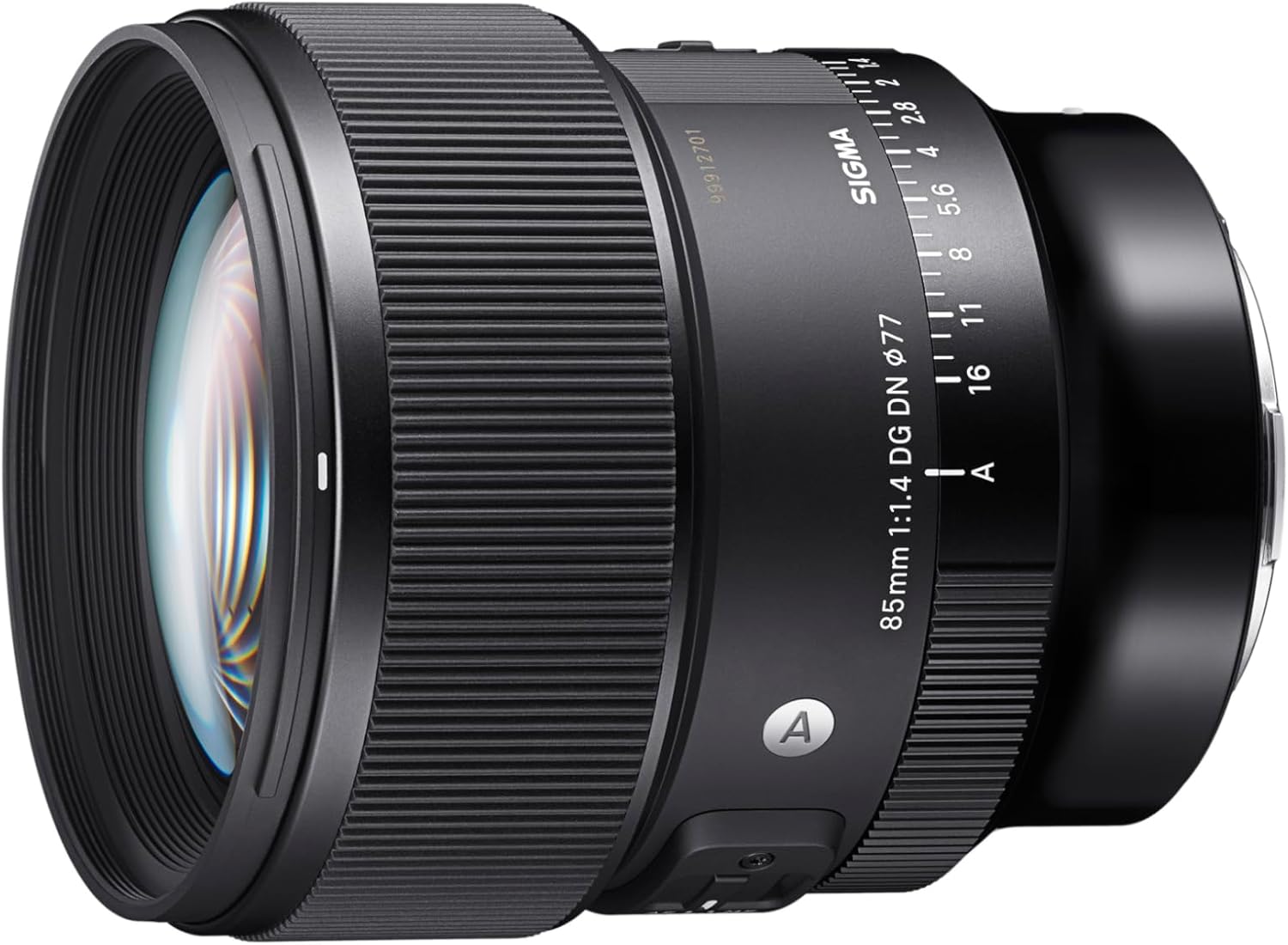
Sigma 85mm f/1.4 DG DN Art
The portrait lens of dreams. Creamy bokeh, incredible sharpness, and beautiful rendering. This is what makes photos special.
Check Price on Amazon →$900 + $1,200 = $2,100 — that's two world-class lenses that will transform your photography far more than a camera body upgrade ever could.
Or, you could get the Tamron 28-75mm f/2.8 G2 (~$900) and the Sigma 100-400mm f/5-6.3 (~$900) and have a complete lens lineup covering every scenario.
Plot Twist: The A7 V Is Coming Soon
Here's the real kicker that's making me hold off on pulling the trigger: the Sony A7 V is expected to launch in 2026 (possibly late 2025 if we're lucky).
What does this mean?
When the A7 V Drops, A7 IV Prices Will Plummet
Camera prices follow a predictable pattern:
- Current A7 IV price: $1,800-2,000
- Expected price drop when A7 V launches: $1,500-1,700
- 6 months after A7 V launch: Probably $1,200-1,400
So if I wait another 6-12 months, I could potentially save $300-500 and get the exact same camera. Or, I could stretch and get the A7 V with even better specs.
Patience is a photographer's best financial strategy. 😄
What We Know About the A7 V (Rumors)
Based on industry rumors and Sony's typical upgrade cycle, the A7 V might include:
- Improved sensor (possibly 36-40MP)
- Even better autofocus with AI-powered subject recognition
- 8K video (for those who care)
- Better IBIS (image stabilization)
- Dual CFexpress Type A slots (still don't care, but okay)
- Improved processing for better low-light performance
If the A7 V comes in around $3,000-3,500, and the A7 IV drops to $1,500... suddenly the decision becomes a lot more interesting.
Final Verdict: Should You Upgrade from A7 III to A7 IV?
After all this analysis, here's my honest recommendation:
✅ Upgrade to A7 IV If:
- You need higher resolution for heavy cropping or large prints
- You're a videographer who needs 10-bit 4K 60p
- You shoot a lot of fast-moving subjects (sports, wildlife, energetic kids)
- The articulating screen would be useful for your specific workflow
- You can get a good deal (under $1,700) or sell your A7 III for a good price
❌ DON'T Upgrade If:
- Your A7 III is working perfectly fine (like mine)
- You're primarily a photographer (not videographer)
- You could spend that money on better lenses instead
- You're willing to wait 6-12 months for the A7 V announcement and price drops
- The thought of learning a new menu system makes you groan
🤔 My Personal Decision
For now, I'm holding onto my A7 III and waiting to see what happens with the A7 V. Here's my plan:
- Wait for A7 V announcement (expected late 2025 / early 2026)
- See how much A7 IV prices drop
- Evaluate if the 33MP sensor is really necessary for our iris photography
- Maybe invest in another lens instead (looking at you, Sigma 85mm f/1.4...)
The A7 III has been an absolute workhorse for 4 years. It owes me nothing. And honestly, when I look at the photos we've created with it, I can't justify spending $2,000 on marginal improvements when that money could go toward marketing, better lenses, or simply staying in the bank.
The Best Camera Is the One You Have
Here's the thing that took me years to learn: camera upgrades have diminishing returns. The jump from a smartphone to a basic mirrorless camera is HUGE. The jump from an A6000 to an A7 III is significant. But the jump from an A7 III to an A7 IV? It's incremental.
Your photography will improve much more from:
- Practicing more
- Studying composition and lighting
- Investing in better lenses
- Learning advanced editing techniques
- Shooting in challenging conditions
...than from buying a camera body with 9 more megapixels.
Frequently Asked Questions
Is the Sony A7 III still worth buying in 2025?
Absolutely yes. The A7 III is still an excellent camera in 2025. With prices around $1,250 used or $1,500 new, it offers incredible value. Unless you specifically need the A7 IV's video features or higher resolution, the A7 III is a fantastic choice.
How much better is the A7 IV autofocus compared to A7 III?
The A7 IV's autofocus is noticeably better, especially for tracking moving subjects and in challenging lighting. However, the A7 III's autofocus is still excellent for 95% of photography scenarios. If you're frequently missing shots due to autofocus, the A7 IV might help—but often better technique is the real solution.
Is 33MP overkill for portrait photography?
For most portrait work, 24MP is plenty. However, 33MP is genuinely useful if you do heavy cropping, create very large prints (30x40"+), or shoot specialty work like our iris photography where you need maximum detail. For standard family portraits and headshots, you won't notice the difference.
Should I wait for the Sony A7 V?
If you can wait 6-12 months and your current camera is working fine, yes! When the A7 V launches, A7 IV prices will likely drop by $300-500. Plus, you'll be able to compare specs and make a more informed decision. There's no rush—camera technology improves slowly, and the A7 III is still excellent.
What's more important: upgrading the camera body or buying better lenses?
Better lenses, hands down. A great lens on an older camera body will produce better images than a mediocre lens on the latest camera. If you have $2,000 to spend, invest in premium lenses like the Sigma Art series or Sony G Master lenses. Your photography will improve dramatically more than from a body upgrade.
Does the A7 IV have better low-light performance than the A7 III?
Not significantly. Both cameras have the same ISO range (100-51200), and in real-world testing, their low-light performance is very similar. The A7 IV's newer processor provides slightly cleaner files at high ISOs, but the difference is marginal. Don't upgrade solely for low-light performance.
Is the battery life worse on the A7 IV?
Yes, slightly. The A7 III is rated for 710 shots per charge, while the A7 IV is rated for 580 shots. The higher resolution sensor and improved processing require more power. In real-world use, both cameras will last a full day of shooting, but you might need to swap batteries slightly more often with the A7 IV.
Can I use my A7 III lenses on the A7 IV?
Yes! Both cameras use the Sony E-mount, so all your existing lenses will work perfectly on the A7 IV. This is one of the benefits of staying within the Sony ecosystem—your lens investment carries forward.
📸 Want More Tips & Reviews?
🎁 Get your FREE PDF: "7 Photography Tips & Rules of Thumb" instantly when you subscribe!
My wife and I share honest gear reviews, photography tips, and behind-the-scenes insights. No spam, just good photography content! 😊
The Bottom Line
The Sony A7 IV is an excellent camera. But so is the Sony A7 III. Unless you have specific needs that the A7 IV addresses (higher resolution, better video, improved autofocus), there's no compelling reason to upgrade right now—especially with the A7 V on the horizon.
My advice? Keep shooting with what you have, invest in better lenses, and wait to see what happens with the A7 V. Your wallet (and your photography) will thank you.
Remember: the best camera is the one that's in your hands, fully paid off, and that you know how to use like an extension of yourself. For me, that's still the A7 III. 📸
About the Author
Petko Karagyozov is a professional photographer and co-founder of La Estrella Photography. He's been shooting with Sony cameras for 7+ years, including the A6000, A6300, A6600, A7 II, and A7 III. Together with his wife Zori, they specialize in family portraits, events, and unique iris photography.